The New Bosses 2025: James Blackall, The O2
Continuing a series of interviews with this year's New Bosses, IQ speaks to the deputy production manager
By IQ on 15 Aug 2025
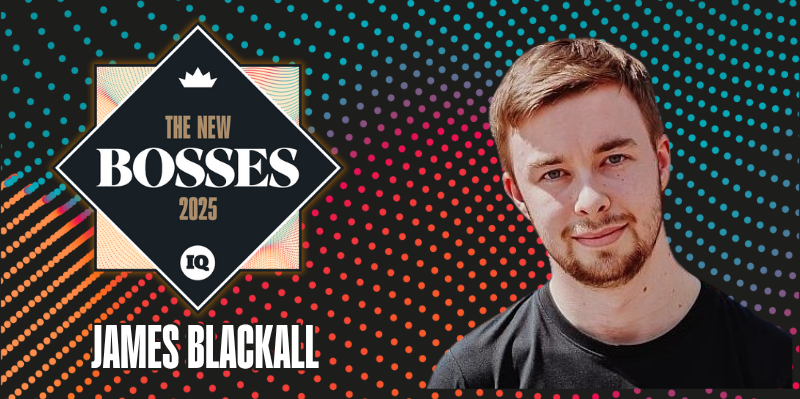
The 18th edition of IQ Magazine’s New Bosses in association with Futures Forum was revealed in IQ 137, recognising 20 of the most promising 30-and-unders in the international live music business. To get to know this year’s class a little better, IQ conducted interviews with each one of 2025’s New Bosses, discovering their greatest inspirations and pinpointing the reasons for their success.
James joined The O2 in 2023 as production supervisor when he was just 18 years old. He has quickly risen through the ranks to become deputy production manager thanks to his operational excellence, technical expertise, and relentless commitment to delivering a best-in-class experience for the hundreds of artists and performers who come to the venue each year.
In the past 12 months alone, James has earned key certifications including BS7909, IOSH Managing Safely, and become an AutoCAD Certified Professional — while simultaneously leading major production efforts for world-class events like League of Legends World Championships, F1 75 Live, and Justin Timberlake, Sabrina Carpenter, Usher, Paul McCartney, Tyler The Creator, Linkin Park and more. He oversees the electrical and rigging contracts for The O2 Arena and has implemented new processes and efficiencies for maintenance and inspection, raising safety and quality standards across the board.
From playing a pivotal role in designing bespoke, one-of-a-kind global shows to supporting major world tours and driving industry best practices, James is a rising leader who is helping to shape the future of live event production.
You’ve been involved in live events since you were a teenager – was someone else in your family involved in the business, or was there something or someone else who prompted your interest?
From a young age, I always knew this industry was where I wanted to be, though the original dream was to pursue a musical career; I grew up playing in a few bands. That’s when I first got a taste for the tech/production side, mixing FOH and monitors for friends’ gigs, whilst also working local crew on various stadium and arena shows.
From there, I became really focused on learning as much as I could across every department (audio, lighting, video, backline, etc.) so I could confidently step into any role on a show. Naturally, that led me to fall in love with production management, and I knew that’s where I wanted to drive my career!
Do you have a mentor that you learn from, or someone you can rely on to bounce ideas off?
Since starting at The O2 I’ve been so lucky to be supported by such an incredible bunch of individuals both within my team and the wider company. In particular, Rachael Hardman (Head of Venue Management at The O2) has always been someone I can consistently turn to for honest feedback, guidance, and support; she’s been hugely influential in helping shape my career, and I am so grateful for all she’s done for me.
“Being reliable, easy to work with and showing up with a smile is what takes you the distance”
What’s the best piece of advice you’ve been given so far?
The most cliché answer to this question, but I would genuinely say “it’s not what you know, it’s who you know”. In this industry, it really is all about the relationships and connections you build with people. Of course, having the right skills and qualifications matters, but it’s ultimately the impression you leave once the job is done that helps shape your path.
Some of the best opportunities I’ve had in this industry have come from people I worked with early on (whether crewing at small venues or volunteering) who remember my work ethic and attitude.
This industry is built on trust and reputation, so being reliable, easy to work with and showing up with a smile is what takes you the distance.
In five years’ time, you’re still going to be on the young side of 30. What are your ambitions during that timespan?
Over the next five years, I want to continue pushing the boundaries of what we can deliver and achieve at The O2. I’m so incredibly fortunate to work at the world’s busiest live entertainment venue, and I see this as an opportunity to keep raising the bar and breaking more internal records within the business.
Personally, I want to keep learning, growing, developing, and progressing in my career – taking on new challenges, opportunities and expanding my leadership skills.
What has been the highlight of your career, so far?
There have been so many events and projects that I’ve had the privilege of working on throughout my short career, but a definite standout for me is leading venue production on the 2025 F175 Live event at The O2 back in February. I can’t say I’ve ever been an avid F1 fan, but seeing the months of work come to life on the arena floor was incredibly rewarding. It was a huge collaborative effort, with a very tight turnaround and a lot of moving parts, which really pushed me both personally and professionally. It was definitely one of those projects that reminds you why you love working in live events!
“The nature of the industry can take a serious toll on an individual’s mental well-being”
What advice would you give to anyone who is trying to find a job in live music?
Be curious, proactive and get yourself out there! The live music industry is so fast-paced and competitive, so gaining experience (whether through volunteering, work experience or internships) can really set you apart. Networking is also key; so many opportunities come from conversations and connections, so never be afraid to reach out to people and ask questions. And most importantly, be passionate and persistent; if you genuinely care about the work, that enthusiasm will give you an edge and open doors.
As a new boss, what one thing would you change to make the live entertainment industry a better place?
If I could change one thing to make the live entertainment industry a better place, I would continue pushing for greater support around mental health. Whilst there has been real progress in recent years, there’s still a way to go.
The nature of the industry – long/unsocial hours, irregular schedules, constant travel, job insecurity, poor diet and high-pressure environments – can take a serious toll on an individual’s mental well-being. And yet, the culture often leans towards pushing through without acknowledging burnout, stress, or emotional fatigue.
Although there have been vast strides already, I’d love to encourage more change in normalising these conversations, providing better resources, and actively supporting teams (not just whilst working but in everyday life).
You work across a diverse range of events. What productions or tours are you most looking forward to in the year ahead?
It’s so hard to pick just one – The O2 (being the busiest live entertainment venue in the world) has got an incredible back-to-back line-up scheduled over the next year. From many major international music tours to sporting events and everything in between, it’s the variety that makes it so exciting for me, and 2025 is looking to be one of our best years yet.
“Each show presents its own set of complexities”
I can see that you devote some of your time to various working groups, helping to improve the backstage side of the business. Can you tell us about those endeavours?
I’m really passionate about contributing to the wider industry, particularly when it comes to improving safety standards and best practices across the industry. I currently serve as vice chair for the Association of Event Venues (AEV) “Electrics Technical” working group, where we collaborate on guidance, share knowledge and streamline safety practices across UK venues. I’m also an affiliate member of IOSH, and I work alongside the National Rigging Advisory Group (NRAG).
In your position, you presumably have to plan for many eventualities that don’t occur. Can you talk about the efforts that you and your colleagues make to ensure safety, for instance?
With such a high turnover of events at The O2 arena, one day we might be delivering a global touring artist and the next a sporting event like basketball. Each show presents its own set of complexities, whether it’s stage design, crowd flow, rigging or barrier configuration.
It’s essential to stay a few steps ahead of industry trends and remain proactive in learning from others. That means stepping out of the office, sharing best practices with fellow venues, and engaging with well-established touring teams. Site visits are particularly valuable, allowing us to anticipate potential challenges and resolve issues before they arise. By combining forward planning with on-the-ground insight, we’re able to maintain the highest standards of safety and efficiency across every event!
Get more stories like this in your inbox by signing up for IQ Index, IQ’s free email digest of essential live music industry news.
