The New Bosses 2025: Isabel Roudsarabi, Höme – Für Festivals
Continuing a series of interviews with this year's New Bosses, IQ speaks to the co-founder and MD
By IQ on 14 Aug 2025
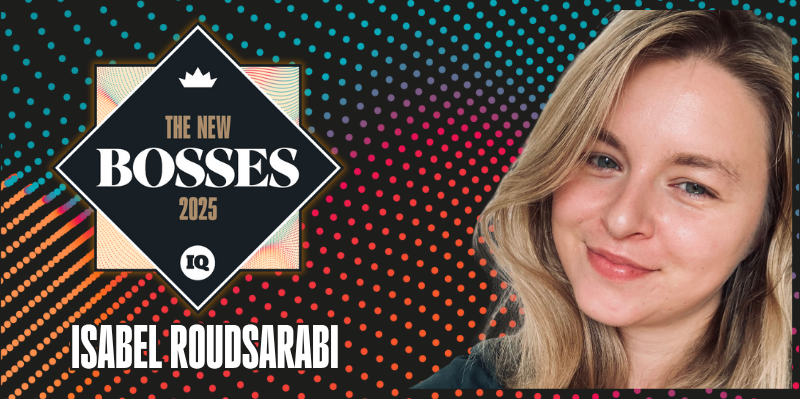
The 18th edition of IQ Magazine’s New Bosses in association with Futures Forum was revealed in IQ 137, recognising 20 of the most promising 30-and-unders in the international live music business. To get to know this year’s class a little better, IQ conducted interviews with each one of 2025’s New Bosses, discovering their greatest inspirations and pinpointing the reasons for their success.
Isabel lost her heart to festivals whilst studying at university. After working for Berlin PR agency Snowhite and at a number of events, including Lunatic Festival and Ms Dockville, she is now building a home for festivals and live music events at Höme. She is committed to making the industry a more sustainable, fair, and innovative place and is also a co-founder and board member of the volunteer organisation fæmm, supporting FLINTA* behind and onstage, building networks and educating on feminist themes.
Höme seems to have really caught the imagination in Germany. Can you give us an idea of the services you offer?
We are a festival & event network and platform, striving to change the industry for the better. We’re building a discovery platform for live music events called infield (infield.live), where fans can find events through filters, content and maps, buy tickets and can enjoy new services like our free-of-charge refundable tickets, to help make the summer plans even more flexible.
The past four years, we have also put on Festival Playground, a conference only for music festival organisers, attended by 140+ festivals every year.
We are also very actively working with NGOs and organisations like Yourope, Music Declares Emergency, Act Aware or The Changency, building campaigns, creating festival surveys to better understand the audience, guides for Awareness concepts, educational trips to different festivals, or even just sharing their work with our network. Our organisation is built around awareness & purpose, and we were awarded our B Corp certification this year to manifest that. Everything we do should always benefit events & visitors alike.
Do you have any plans to expand outside of Germany into other countries?
Definitely. We are already working with a couple of festivals outside Germany (e.g. Garbicz, Am Bach Festival) and are planning to expand in the upcoming years. We have really appreciated the exchange we have with festivals all over Europe through the Yourope network and would love to broaden our platform to accommodate more international events as well.
“Our goal is to be an empowering, intersectional community for all queer-feminists in the music industry”
If you had one tip for festival organisers to slash their carbon footprint, what would it be?
Communicate with your audience, artists and service providers. There are so many things you can do internally to make your festival more sustainable, but I feel the most important impact you can have is in working together with your visitors and stakeholders. Individual travel is still one of the biggest carbon footprint boosters, so incentivise carpools and trains, educate your audience on food choices and their impact, come up with sustainability concepts together with those they concern and share the awareness & responsibility regarding the topic.
You’re a co-founder of fæmm. Can you tell us more about the organisation and its goals?
We founded fæmm in 2020 with a group of young women in the industry, because we needed a safer space to come together to share experiences and ideas, that we felt weren’t heard elsewhere. When we started, we focused mainly on regular get-togethers, talking about topics like what it’s like to have your period on a multiple-week-long festival production or what the status quo of feminism in hip-hop culture looks like. In the past years, we have broadened our network and now also organise parties or FLINTA* showcases, attend demonstrations together, we have had a long-running radio show, are presenting tours from upcoming female artists and are working on many more projects throughout the year.
Our goal is to be an empowering, intersectional community for all queer-feminists in the music industry, a playground to set ideas into action and a space for critical dialogue on these topics.
And what about FLINTA* – are you seeing any progress being made either on stage or behind the scenes?
Yes and no. I really appreciate seeing more feminist topics discussed on conference stages and more artists and professionals openly taking a stance for gender equality – and I see progress in general awareness & visibility. But I also get frustrated regularly, when we hear about another sexist assault from someone in the industry – without it having any consequences – and I’m just tired of people saying “It’s a process”, when confronted with their 5% female act quote on a major festival line-up.
“I’ve learned something from almost every event that we have worked with”
At fæmm, we are really trying to not only talk to other FLINTA*s and also include cis-male perspectives in the dialogue, but we now have around 50 members, of which only 4 use he/him pronouns. Feels like preaching to the choir sometimes. So I would love for a process and discussion that puts the responsibility on everyone, not only the people who are actually affected by being marginalised because of their gender. We need more active and loud allyship.
When it comes to using festivals to help change society, are there any events you would point to that other organisers might do well to emulate?
Roskilde. It’s been an inspiration for us even before Höme was founded and has been ever since. Every year, I’m in awe of what they come up with – be it a project for audience involvement, a card game to learn about each other’s boundaries, the way they communicate socio-political topics…
But I also always love to look beyond the music festival landscape and see what other industries’ events are doing. We are, for example, working with re:publica, a Berlin conference on all things digital, that really gets how to morph politics and pop culture. Or I just recently learned about Folkemødet, a Danish democracy event, to foster the relationship between politicians and citizens and create dialogue in a fun and festival-like setting, which I thought was an amazingly interesting concept.
In general, I’ve learned something from almost every event that we have worked with and try to look closely at all aspects of an event to find inspiration – everyone has their speciality, finds a new perspective or a new solution to a social question.
What’s the best piece of advice you’ve been given so far?
Follow your contribution. I’ve heard that in a speech somewhere, and it really resonated. Passion is one thing, but real satisfaction and growth only come with thinking about not only what you like or want, but what can actually make an impact in the world around you – or at least in your immediate proximity. It makes menial tasks so much easier to bear, too, because you know you’re doing them with a greater goal in mind.
“Resilience and having a good support system are the two most important aspects you need to get through it all”
And: Don’t take everything too seriously. Working in the music industry can sometimes feel like you’re at the centre of the world, but you really aren’t. My friends who have other jobs don’t at all care, which artist I talked to backstage at the last festival. This also helps me not to stress so much about whether I still need to send that e-mail at 11 pm or just go to bed and send it early the next day. It’s important and sometimes impactful work that we do – but then most of the time, it’s not at all.
Setting up a new venture in the festivals market can be tough. Do you have any advice for anyone who might be enduring a tricky period in establishing themselves?
It feels like we have been having a tricky period since we founded Höme five years ago, ha. So I’d say just realise that as someone who is creating their own workplace – be it as a freelancer, with a company or as a creative – there are many, many situations where it’s not going to be fun or rewarding at all. I think resilience and having a good support system are the two most important aspects you need to get through it all. And then savour and enjoy every great moment you can get.
Also for me, it really helps to always remember the vision and goals I, or we as a company, have – I write them down or I just think about them before I go to bed – and makes me more aware that even those failures and shitty times can contribute to what’s ahead.
As a new boss, what one thing would you change to make the live entertainment industry a better place?
I’ve been talking a lot about responsibility, and that would also be my answer here. Especially those who already have an impact – big corporations, artists with a bigger audience, etc. – need to use their resources and their voice to spread awareness on social and ecological topics and work on their internal structures.
Also just more FLINTA* in CEO and upper management positions.
What would you like to see yourself doing in five years’ time?
I’d love to get more involved in the industry’s exchange with politics and represent more of the independent and smaller voices in the event landscape. And of course get Höme to a place where we can have even more impact and work with even more organisers, to achieve a fairer, more diverse and sustainable music business.
Get more stories like this in your inbox by signing up for IQ Index, IQ’s free email digest of essential live music industry news.
